Watercolor fails and tips
Originally When I thought about this blog post and painted for it, I wanted it to be some tips and tricks to painting with water color. This post has now become more of a what not do and how to correct mistakes. I know I learn better with visual aids and by trail and error. If you are new for watercolor and need some basic tips to guide you this post is for you
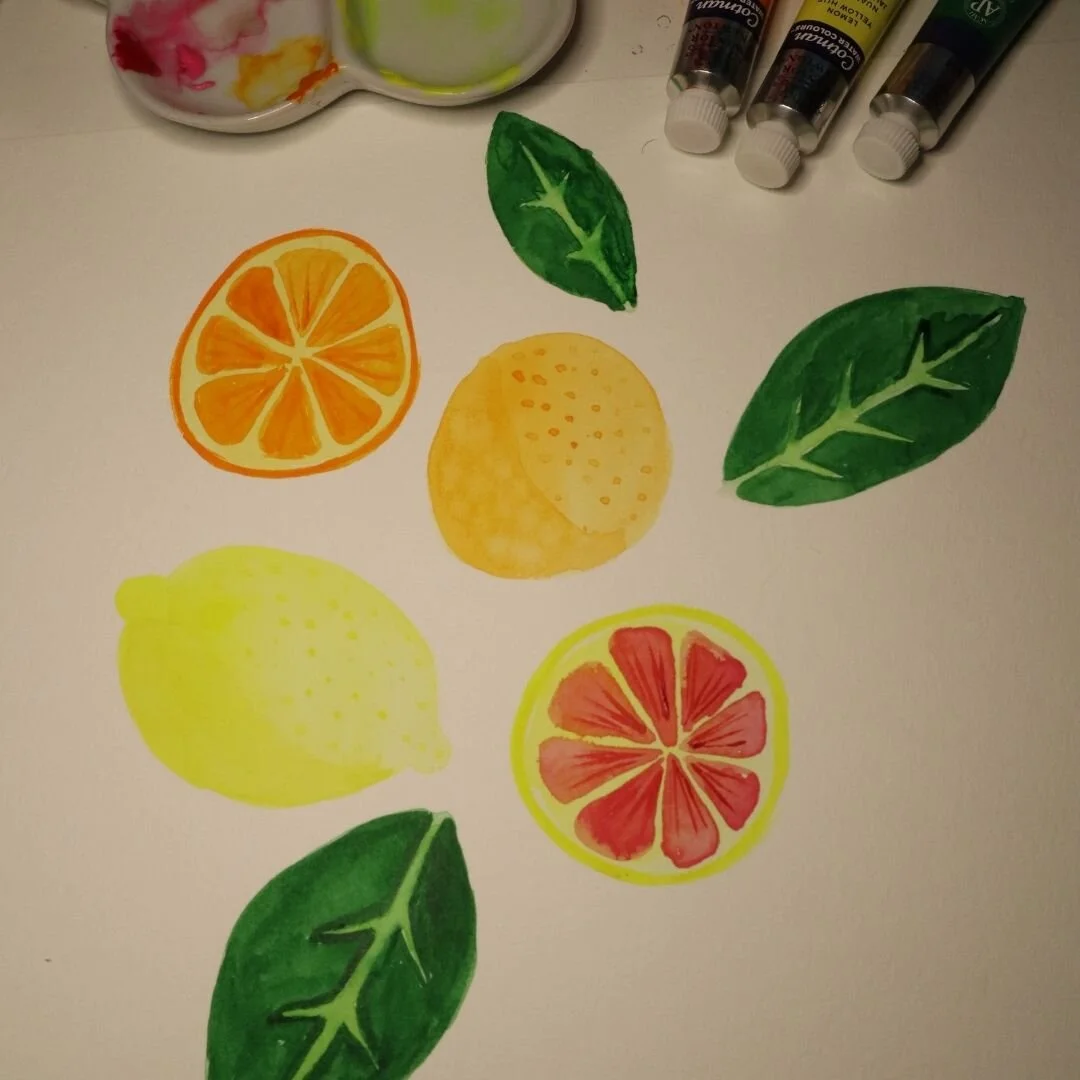
I consider myself a mixed media artist. I love experimenting with new supplies. My favorite supplies are always dictated by whatever I enjoy a painting the most at the time. When I liked painting more surreal paintings I really enjoyed acrylic. When I was going more toward character and cartoon like drawings I loved digital. When I was painting a lot of simple animal and floral paintings I enjoyed watercolor. Currently I’ve really enjoyed playing with colors in landscapes and I really like using gouache for that.
Coming back to a medium you really enjoyed sometimes comes with a learning curve. Not that you don’t know how to use it or forgot but when you get used to one medium and switch gears it may take some practice to readjust. That is exactly what happened here. I had intentions for this blog post for tips and found myself needing tips for for myself to relearn and readjust to a medium I hadn’t been using much.
Lets start with supplies and where I first failed. So with watercolors you need paper that can handle watercolor which essential means, you need paper that can handle a lot of water. If you don’t have paper that can handle this the piece won’t turn out how you want it especially if you are using a technique that requires more water than others.
Lets talk about watercolor techniques. There is wet on wet, wet on dry, dry on dry, and more somehow. These techniques refer to how wet or dry the paint and paper are. For example, wet on wet refers to wetting the paper first and applying watered down paint. Its often used for background or filling a large area. What is confusing about these techniques is the use of the word dry. Watercolor paint is water activated so it is never really dry. When these techniques say dry they mean relatively less water. The drier the brush or paint is the more pigmentation you’re going to get because like in most cases water dilutes the pigment.
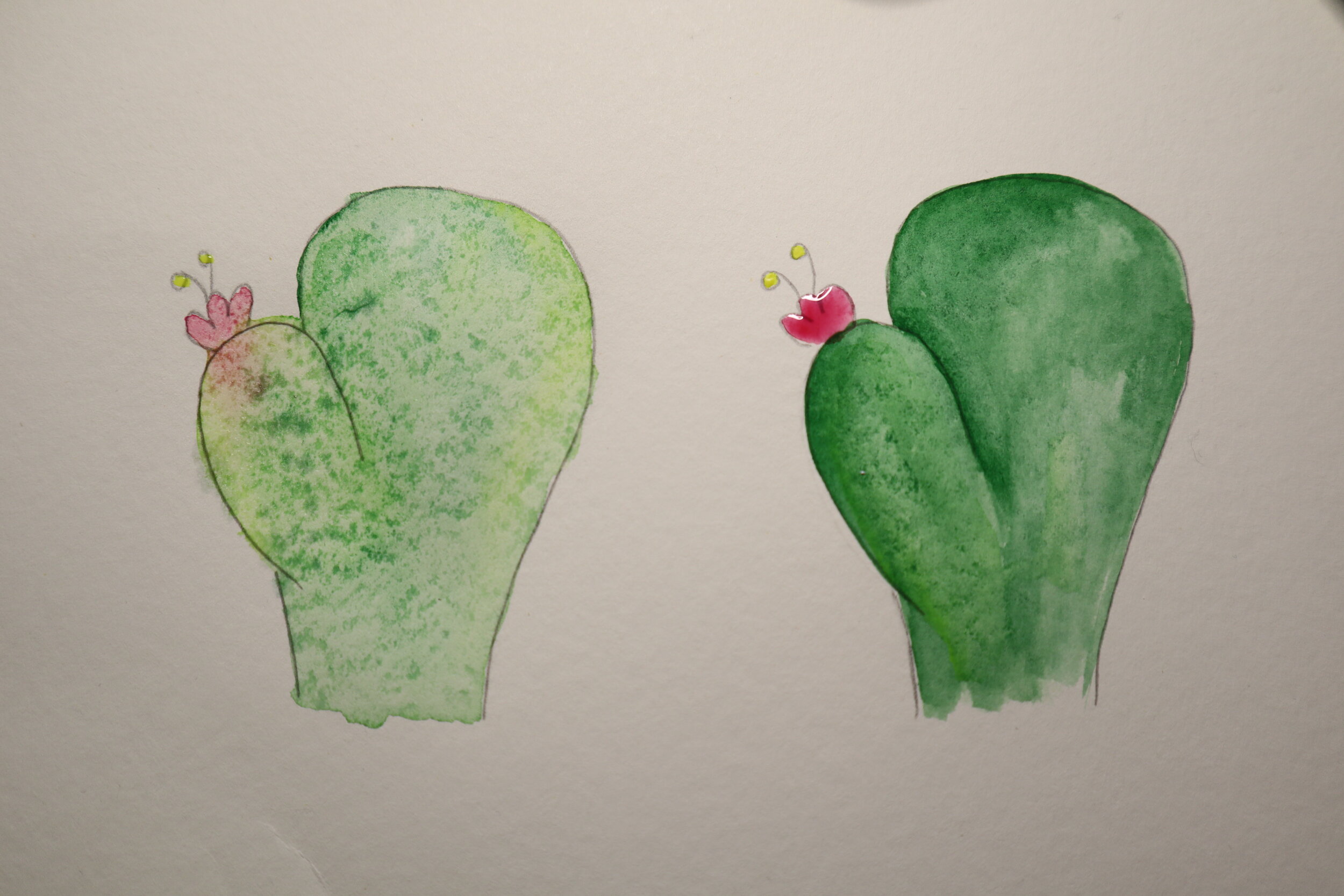
So I went on to try to demonstrate these techniques and quickly realized I was not doing these techniques justice. What went wrong? The cactus on the left I was using paper that couldn’t handle the amount of water I was using. I also used way more water than necessary, to both wet the paper and apply wet paint. On the right side I tried to use a dry technique but it ended up a little more wet than dry.
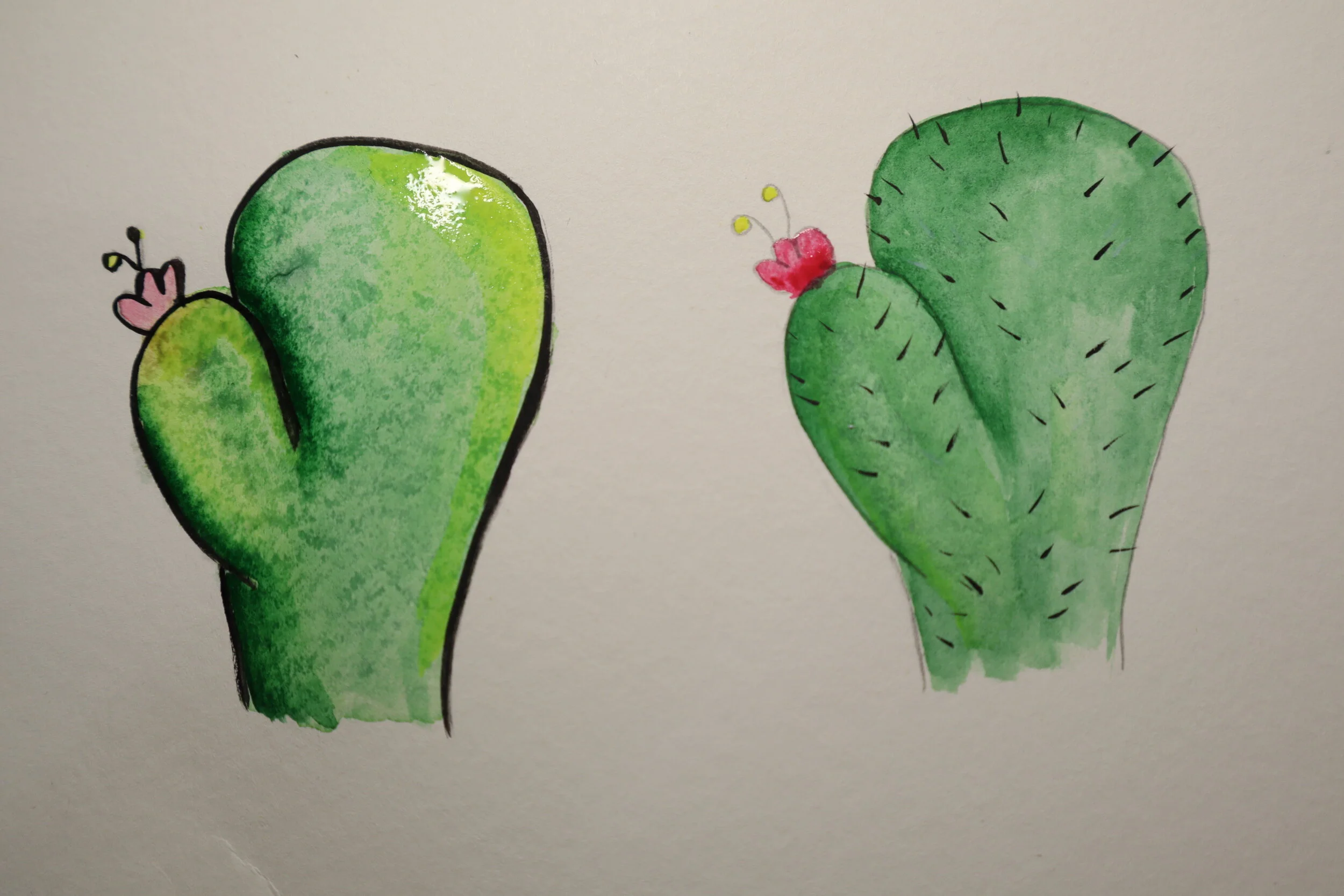
Next I tried to demonstrated the use of dry techniques to layer to create shading and line work and still continued to make errors. On the left side I didn’t give the wet technique the appropriate amount of time to dry before introducing a new color and paint. The shadows ended up being way darker than I wanted and the highlight is almost none existent due to trying to water down the paint and fix what I had done. Instead of being patient and allowing the painting to dry I ended up added even more water to a piece/paper that couldn’t handle it. On the right side I skipped to outer line work to try to avoid more mistakes and just added spikes using the dry on dry technique.
So in order to make up for this messy water color I decided to scrape the cactuses and start fresh by going to absolute basics of watercolor. I simplified what I was doing without worrying about a demonstration. I used less water and was patient with myself and the piece.
Here is a real break down of techniques and how I used them to create something was happy with:
First I used true watercolor paper. This makes big difference on how the pigment looked and dried. No more splotchy looking background.
I used the wet on wet method to create a base for everything. Instead of overdoing it with the water I laid a just a light base coat of water and didn’t over saturate the paint before painting.
I was patient this time and allowed the paint to dry between layering.
I used wet on wet to do base layers then dry techniques once it was dry to create the watercolor effect I was looking for.
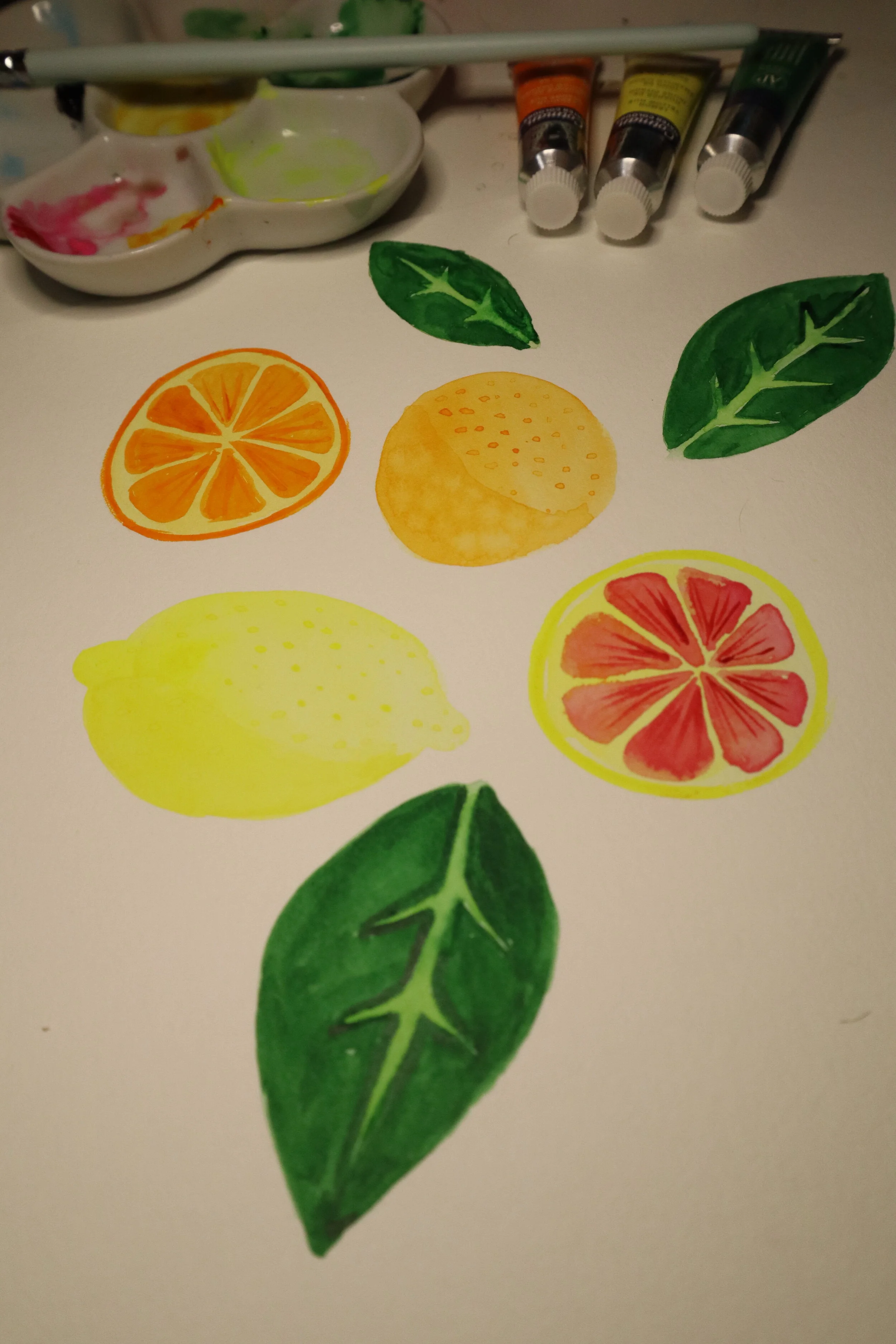
Im much happier with how this went. The cactus was a nice practice and reminded me of the techniques by doing them wrong. Be easy on yourself when you are learning or getting back into the grove of something. “Perfection is the enemy of progess”
Happy Painting,
Mickey